
Build a Claim-to-Source Map for Medical Content Review
A reference identifies a paper. A claim-to-source map gives a reviewer a direct route from a statement or visual to the material that should support it. For Medical Affairs teams, that route makes medical content review easier to follow and document.
Start with a claim you can locate
Give the statement a stable identifier and record where it appears in the asset. Then add the source document, version and exact passage, table or figure. ICMJE asks authors to verify references and ensure they support the associated statements.1 The map helps organise that check; the reviewer still assesses the evidence.
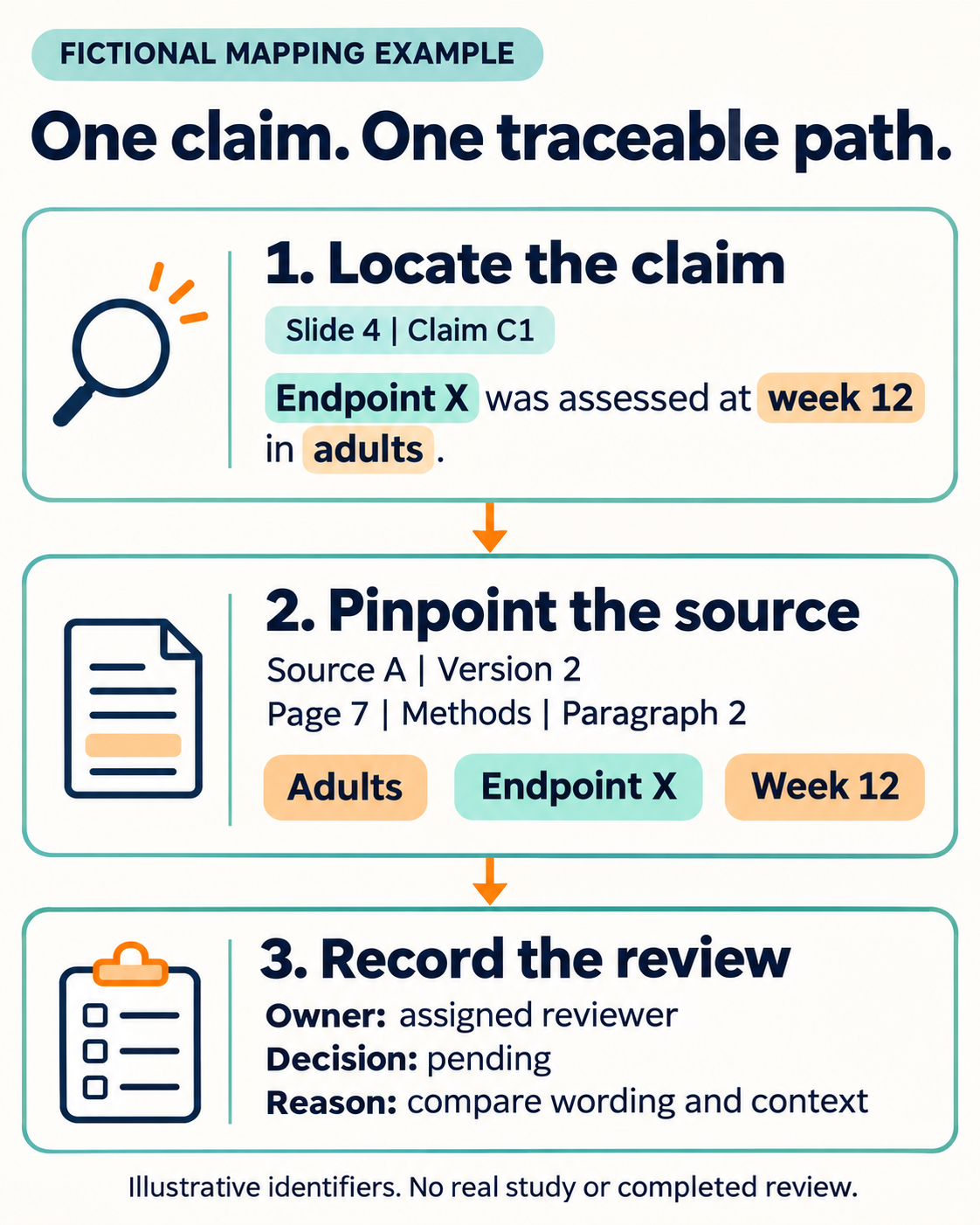
Keep context beside the locator
In the example, a page number alone leaves the reviewer searching. Adding the section and paragraph narrows the route. Keeping adults, endpoint X and week 12 beside the claim also makes its scope visible. In a real project, check the surrounding methods, results and limitations before deciding whether the wording is supported.
Close the row with a decision
Assign a reviewer and leave the decision pending until the check is complete. Record accept, revise, remove or escalate, with a reason and date. If the wording or visual changes, update its location and recheck the affected record so the map still matches the asset.
Use the blank evidence-map template to start your next brief. Bionidi connects source-based content with supporting evidence for medical claim verification. Bring one mapped statement to a Medical Affairs workflow demonstration to explore that connection.
Source: ICMJE, Preparing a Manuscript, References, accessed 27 November 2026. The mapping format is a practical editorial method. The cover photograph and diagram are generated illustrations.